
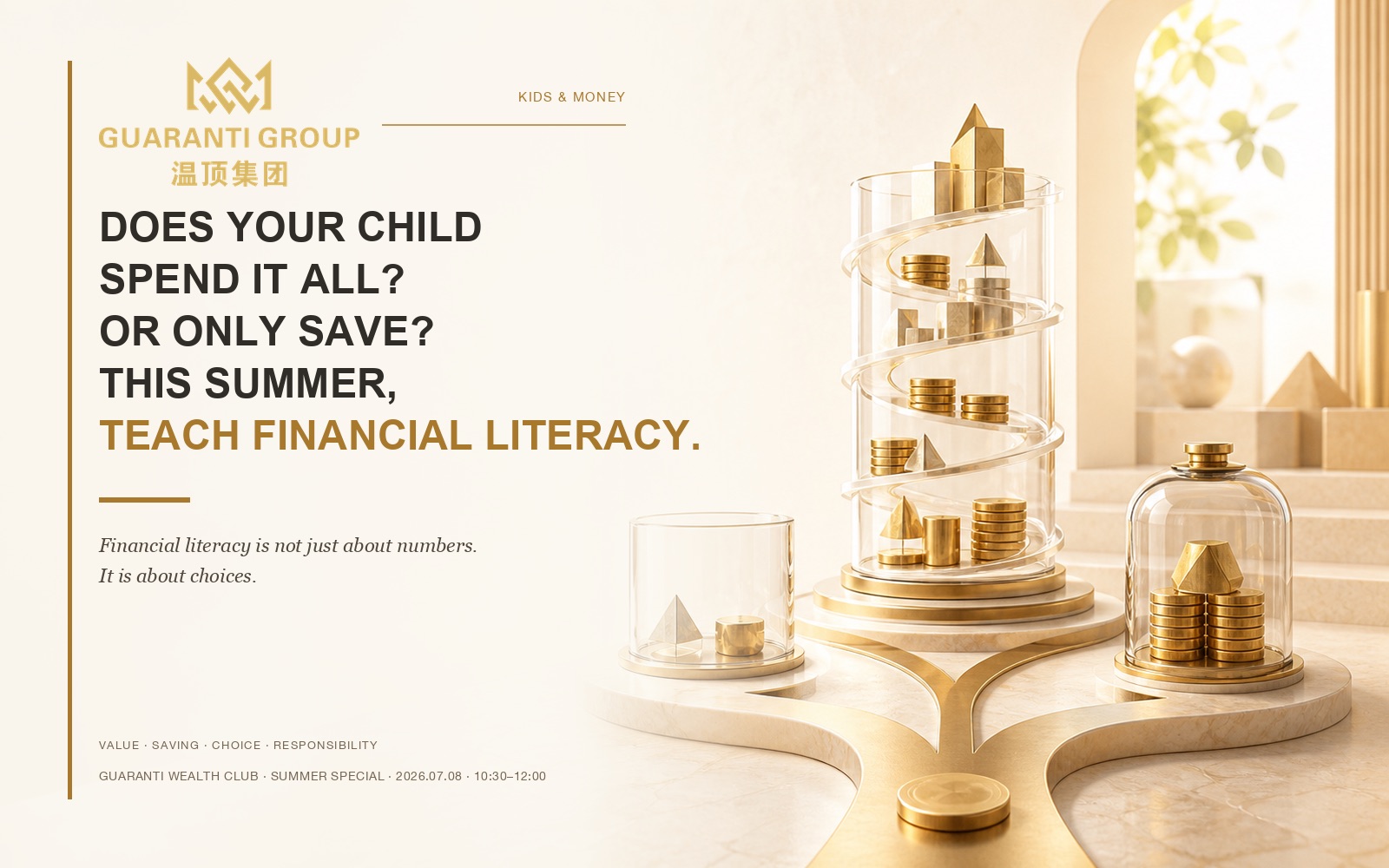
Most parents have watched this happen. Pocket money, a red envelope or a birthday gift card arrives, and it’s gone — toys, games, a series of things that looked essential and were forgotten within days. How are you so bad at saving?
And there’s the other kind of child. Money goes into the jar and never comes out. Ask them why money grows, what the difference is between saving and investing, or what delayed gratification means, and they probably can’t say.
Spends it immediately — the idea of choosing hasn’t formed yet. Spending produces an immediate reward; the consequence of having nothing left hasn’t become real.
Saves but never uses it — knows money can be kept, but not that it can be directed. Knows to be careful with it, but not that it can create something.
The actual problem is that nobody has sat down and talked to them about how money works.
Whichever kind of child it is, it isn’t the child’s failing. Usually it’s that no adult has talked to them about money in a way they could follow.
Why this starts at home
School teaches mathematics. It doesn’t necessarily teach a child to manage their own money.
Most money habits begin at home — how parents talk about money, how they spend, how they handle wanting things and waiting for them. Children absorb all of it gradually.
33 points. The Financial Consumer Agency of Canada, citing student financial literacy research, reports that 15-year-olds who discuss financial matters with their parents at least weekly score 33 points higher in financial literacy than those who never do.
Which suggests the best starting point isn’t a structured course. It’s an ongoing conversation at home.
The difficulty is that many parents don’t know how to open it. Too shallow and the child tunes out; too detailed and they can’t follow. What’s needed is an approach matched to the child’s age and comprehension, so that money gets discussed clearly, healthily, and without awkwardness.
What the session covered
Christine Wen Ma — MDRT® Top 1% member, and a wealth planning advisor who has spent years helping families build financial structures — kept it deliberately simple, aimed at parents learning how to talk to a child about money in the first place:
- Understanding what money is worth
- Learning to save and manage
- That spending is a choice
- The basic idea that money can generate money
- Building a sense of responsibility and confidence
Financial literacy isn’t the ability to count money. It’s the ability to make a choice.

A closing thought
The best thing to leave a child isn’t necessarily a sum of money. Without the right understanding, money gets spent quickly; without the ability to manage it, wealth is difficult to hold on to.
What actually stays with a child for life is their capacity to understand money, manage resources, and make decisions.
This article summarises material presented at a Guaranti Wealth Club public session. It is general information and does not constitute financial advice.
First published on Guaranti’s WeChat account.