
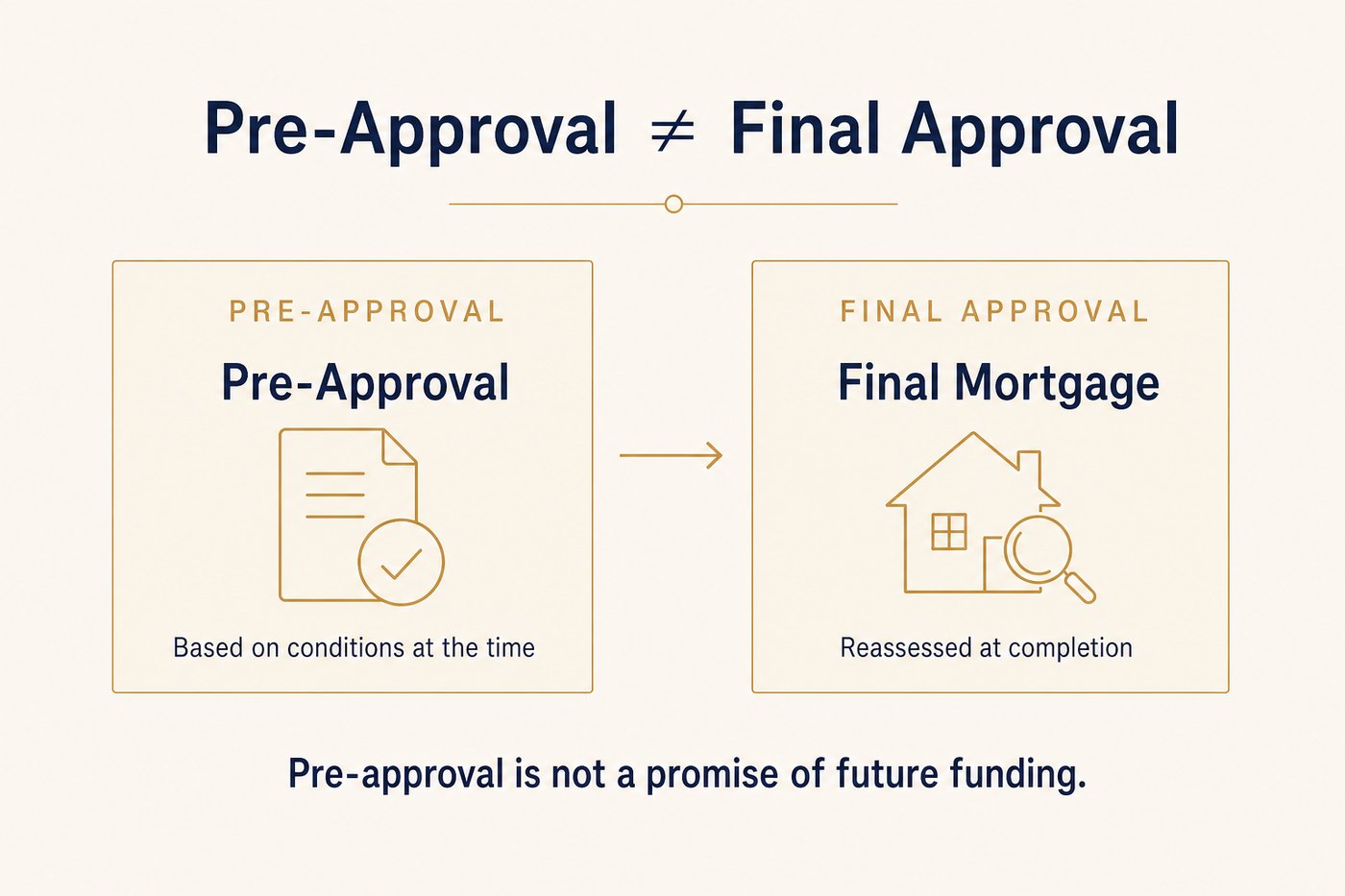
A pre-approval feels like the hard part is over. On a resale purchase, that instinct is usually close enough to true. On a presale, it is the single most common misunderstanding we encounter.
A real case
“Elvis, this doesn’t seem right.”
That was the first thing the client said after sitting down in our boardroom.
Three years earlier he had bought a presale. When it came time to arrange the mortgage he didn’t go to a broker — he went straight to the bank he’d dealt with for years. He wasn’t worried. The bank had pre-approved him back when he bought. As far as he was concerned, this was paperwork.
Then the call came. We’re sorry, we’re not able to approve this.
He was stunned. Why? I had a pre-approval three years ago. Doesn’t “approval” mean approved?
He had assumed the bank was going through a formality. The decline was the first indication that it wasn’t.
His case is not unusual. A large share of the clients who reach us are not shopping for a better rate. They come after a decline, looking for a way forward — and they arrive with the same question.
What a pre-approval actually is
The bank didn’t reverse a decision. The word “pre-approval” did more work than it should have.
People read approval and hear a commitment: the bank has agreed to lend, and will. That isn’t what it is.
A pre-approval is a preliminary assessment based on the income, liabilities and credit you had at that time.
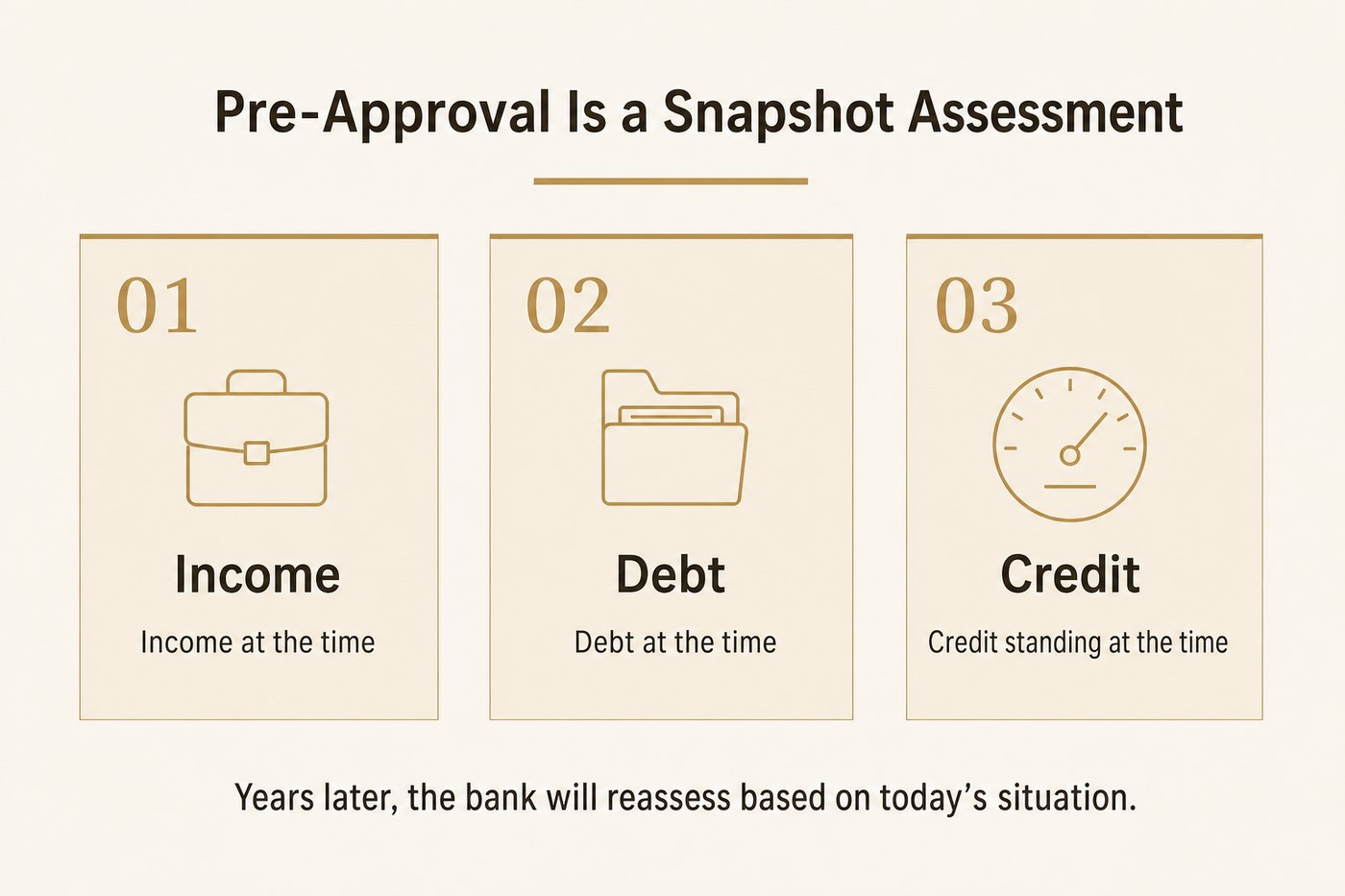
It answers: given your current circumstances, roughly what could you purchase?
It does not answer: whatever changes over the next few years, we will fund this.
A pre-approval is an assessment of the present. It is not a promise about the future.
Why resale buyers rarely run into this
Because a resale purchase runs from contract to completion in a matter of weeks. Income, employment, credit and market conditions have little opportunity to move.
Presale is different. Three years, four, sometimes longer.
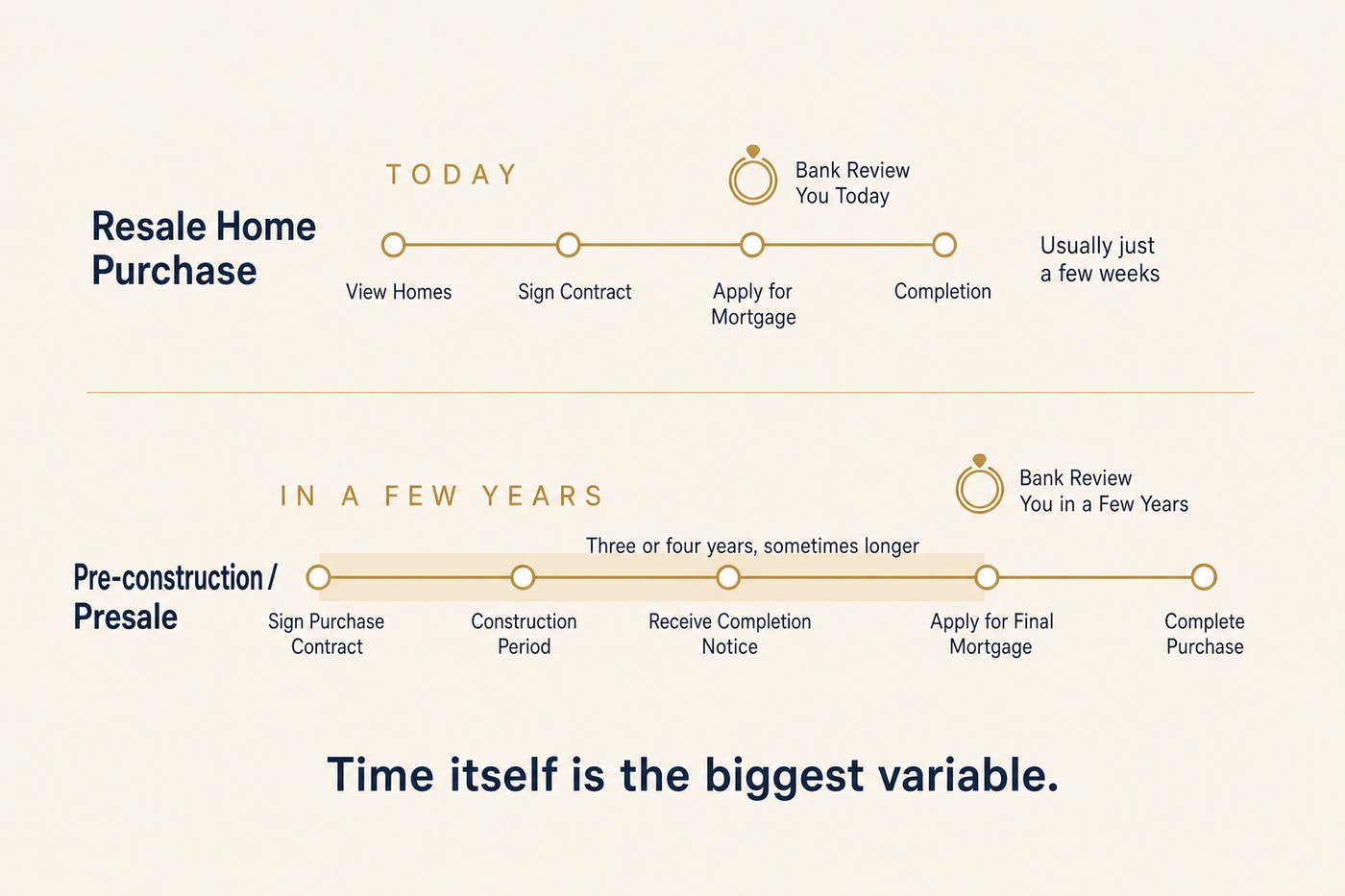
Time itself is the variable. Over those years you might change employers and see your income change with it. You might take on new borrowing. The appraised value of the property might no longer match the contract price.
So when a presale approaches completion, the lender reassesses against today’s circumstances. That isn’t the bank overturning a decision from three years ago. It’s the bank recognising that today’s applicant is not the same applicant.
Which means: what determines whether you complete isn’t the pre-approval you held three years ago. It’s your financing position on the day.
Our view
Most people assume the main presale risk is interest rates rising.
Having worked through a large number of these files, we’d point somewhere else. The variable that gets overlooked is time — and change is what time produces.
A presale mortgage is not a pre-approval. It’s a financing plan that runs for years.
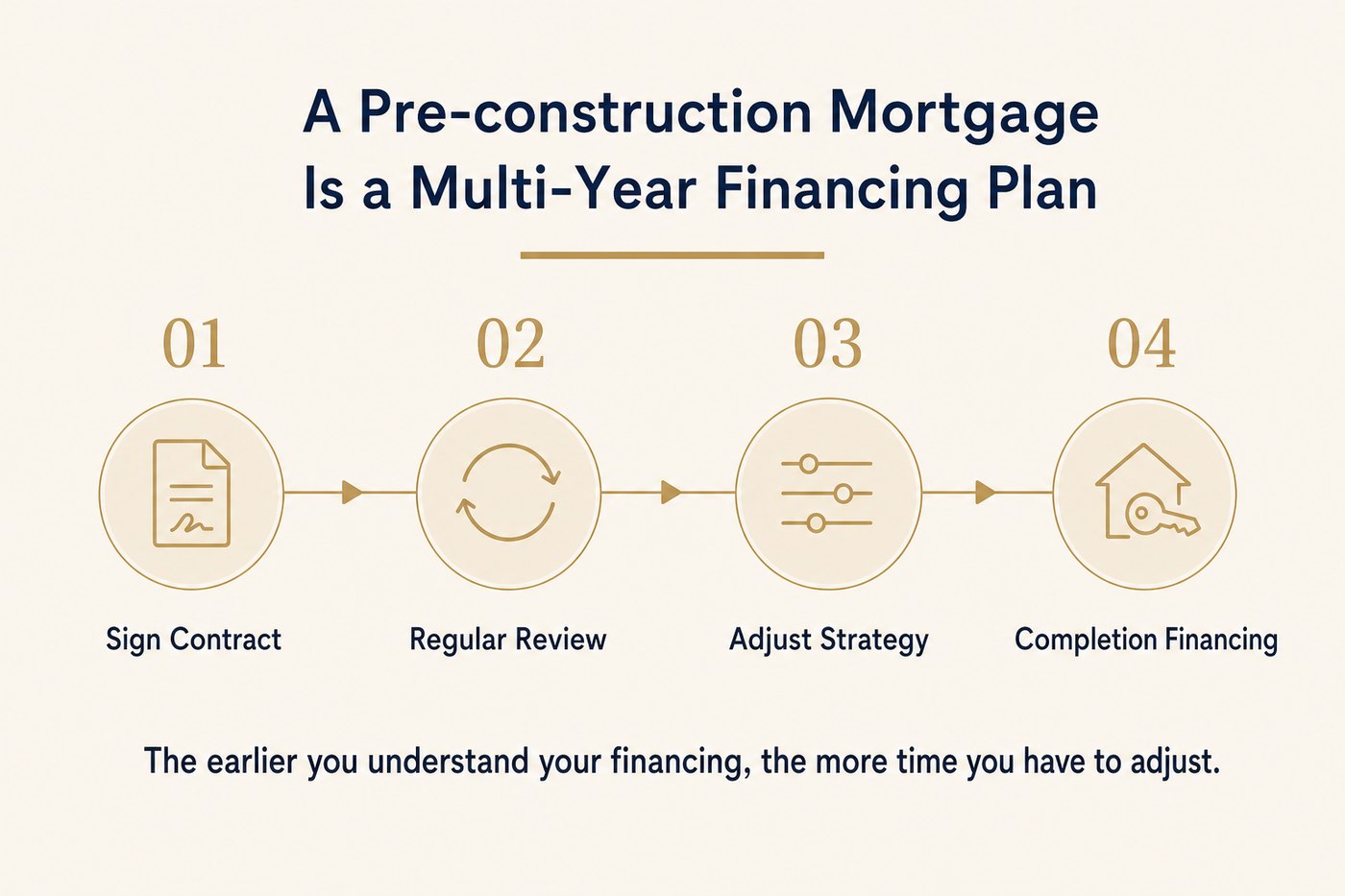
The earlier you understand your own position, the more room you have to adjust income, liabilities, cash and strategy.
Most of these problems are solvable. What makes them hard is starting to look for a solution only after the decline.

Poster for the 19 August 2026 session. It was held in Cantonese, so the poster is in Chinese only.
This article is general information, not advice. Lending criteria vary by lender and change over time; your own situation would need to be reviewed individually.
First published on Guaranti’s WeChat account.