
When a child turns eighteen, families turn their attention to universities, programs and first jobs. Eighteen is also, quietly, a useful starting point for financial planning — and that part tends to get missed.
Canada offers several registered accounts with meaningful tax advantages. Understanding them early makes it easier to build sound habits, and it puts a first home, an investment portfolio and eventually retirement within closer reach.
The three that matter most at this stage:
- TFSA — Tax-Free Savings Account
- FHSA — First Home Savings Account
- RRSP — Registered Retirement Savings Plan
Each does a different job, and each fits a different point in life.
Why eighteen is the right time
The common view is that planning should wait until income is stable and a career is established.
But the greatest advantage in planning has never been having more money. It’s having more time.
After eighteen, a young person begins earning, living independently, and forming their own goals. Understanding what’s available at that point is what makes good saving and investing habits form naturally rather than being retrofitted a decade later.
The three accounts
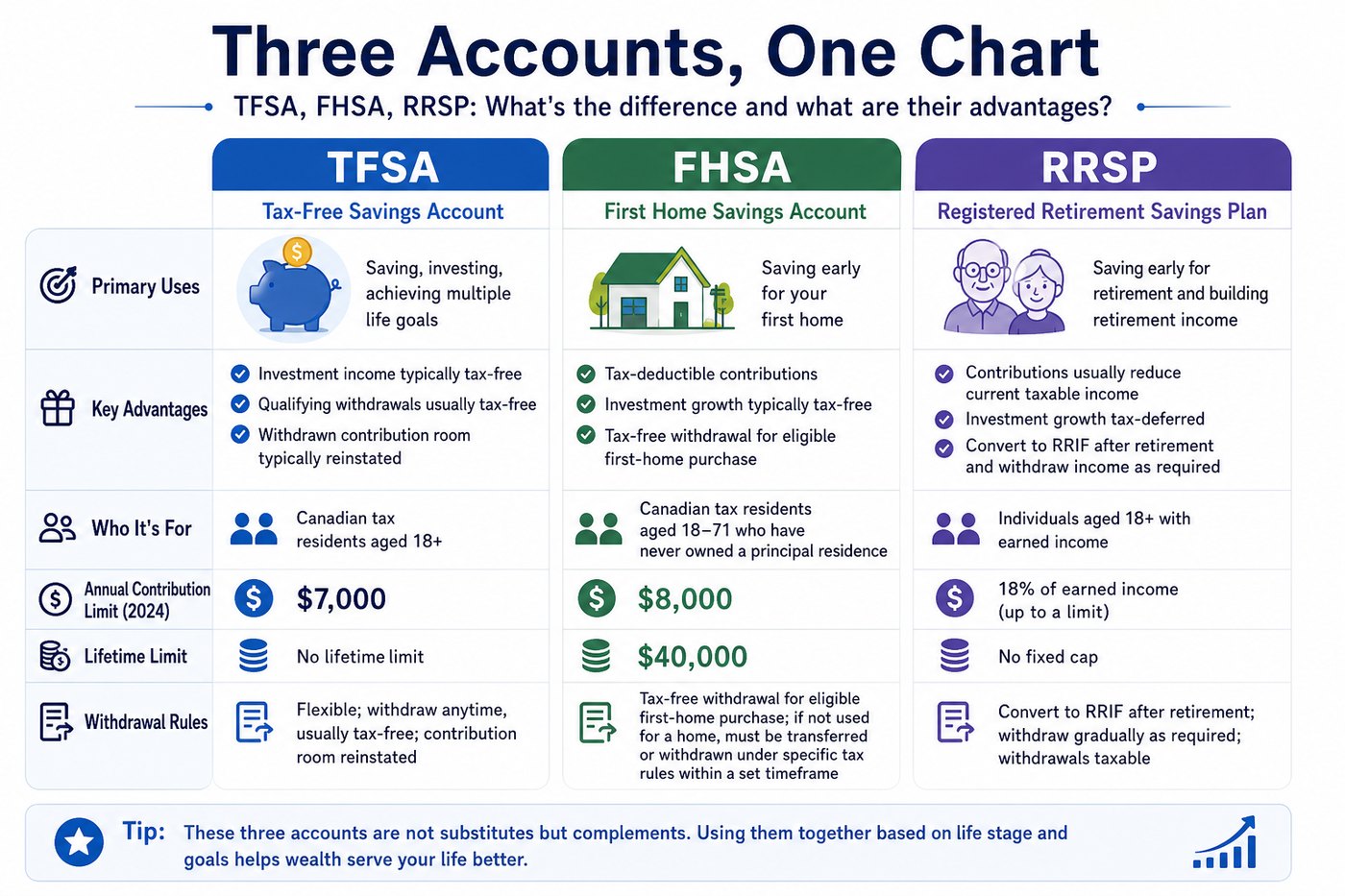
TFSA — the flexible one
Tax-Free Savings Account. The name is slightly misleading: it can hold cash, but it can also hold qualifying investments — funds, ETFs, individual securities.
What defines it:
- Investment income inside the account is generally not taxed
- Qualifying withdrawals are generally not taxed
- Withdrawn room is generally restored in a following year
For a young adult, whether the goal is travel, starting a business, buying a car or investing for the long term, the TFSA is the most adaptable tool of the three.
FHSA — for the first home
First Home Savings Account. Created specifically to help first-time buyers accumulate a down payment.
What defines it:
- Contributions generally receive tax relief
- Growth inside the account is generally tax-sheltered
- Qualifying withdrawals to buy a first home come out tax-free
For anyone who expects to buy eventually, starting early is what turns a distant target into a reachable one.
RRSP — the foundation for retirement
Registered Retirement Savings Plan. Primarily a retirement vehicle, and a central part of long-term planning for Canadian residents.
What defines it:
- Contributions generally reduce taxable income in the year they’re made
- Investment growth is tax-deferred
- In retirement the account is typically converted to a RRIF, from which income is drawn under prescribed rules
Retirement feels remote at eighteen. That remoteness is precisely what makes early contributions effective — the compounding runway is at its longest.
How they differ
The usual question is: isn’t one account enough?
They aren’t substitutes. They were designed around different objectives.
TFSA suits long-term saving and investing where flexibility matters, across whatever a given stage of life requires.
FHSA suits someone planning to buy a first home, with tax advantages aimed at that specific goal.
RRSP is built for retirement, accumulating over decades toward income later in life.
Used together and matched to actual goals, each does what it was designed to do.
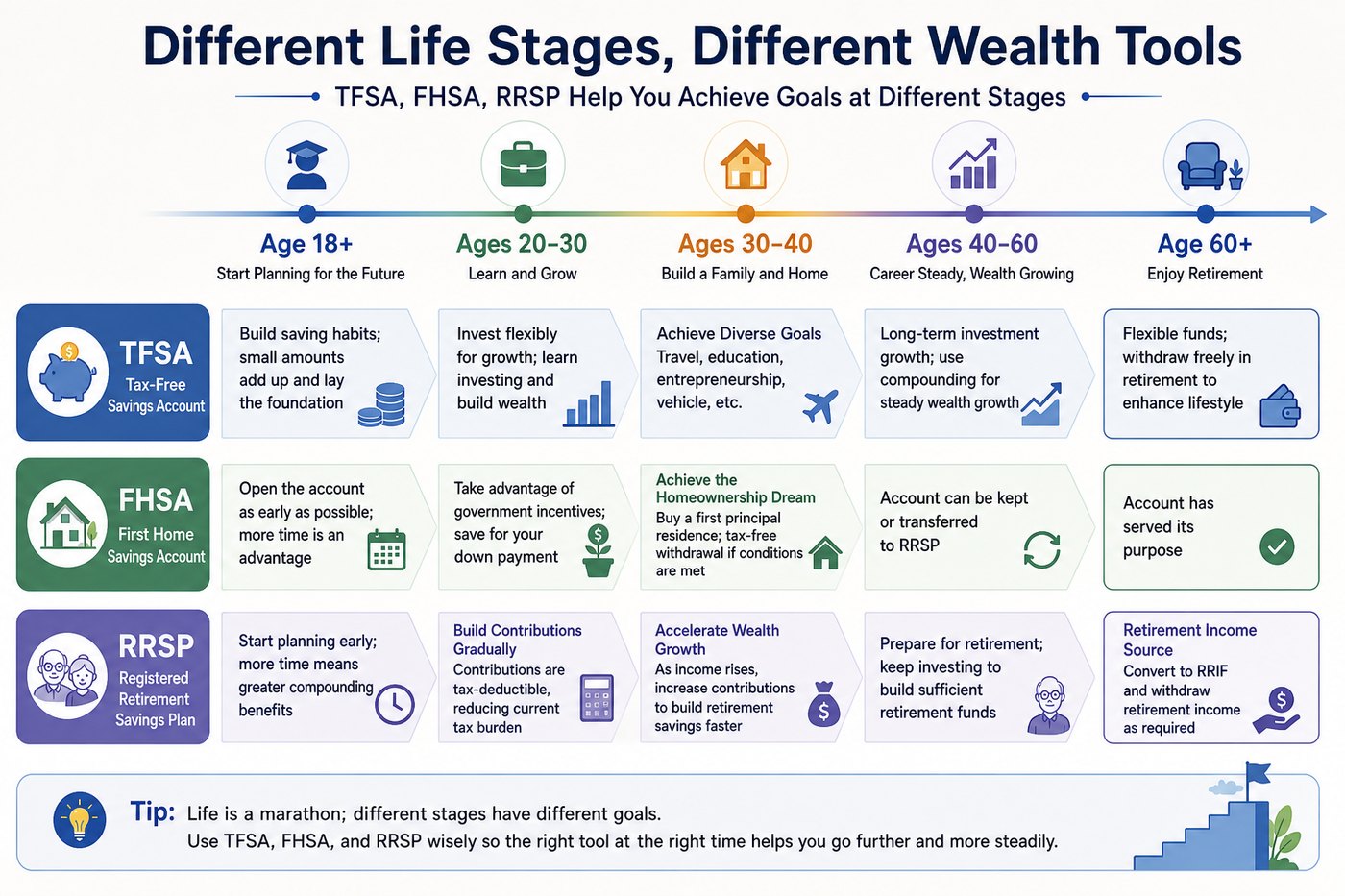
Stage by stage
After eighteen — build the habit of setting money aside, get familiar with the TFSA, and develop a long-term mindset.
Once working — as income grows, look at the RRSP and begin planning for retirement in earnest.
When a first home comes into view — the FHSA becomes the central tool for accumulating the down payment.
There is no fixed sequence. The point is to use the right instrument for the stage you’re actually in.
Our view
Planning doesn’t begin once you have a lot of money.
What matters is developing a clear sense of how money works early, understanding which tools suit your circumstances, and letting time do the part of the work that only time can do.
The earlier you start, the more choices remain available later.
Account rules, contribution limits and eligibility criteria reflect current federal rules and can change. This article is general information, not tax advice.
First published on Guaranti’s WeChat account.