
Buying in Vancouver, most attention goes to two things: was the price negotiated well, and did the mortgage get approved.
Then completion day arrives, and it becomes clear that a property transaction was never a matter of signing a few documents, transferring funds and collecting keys.
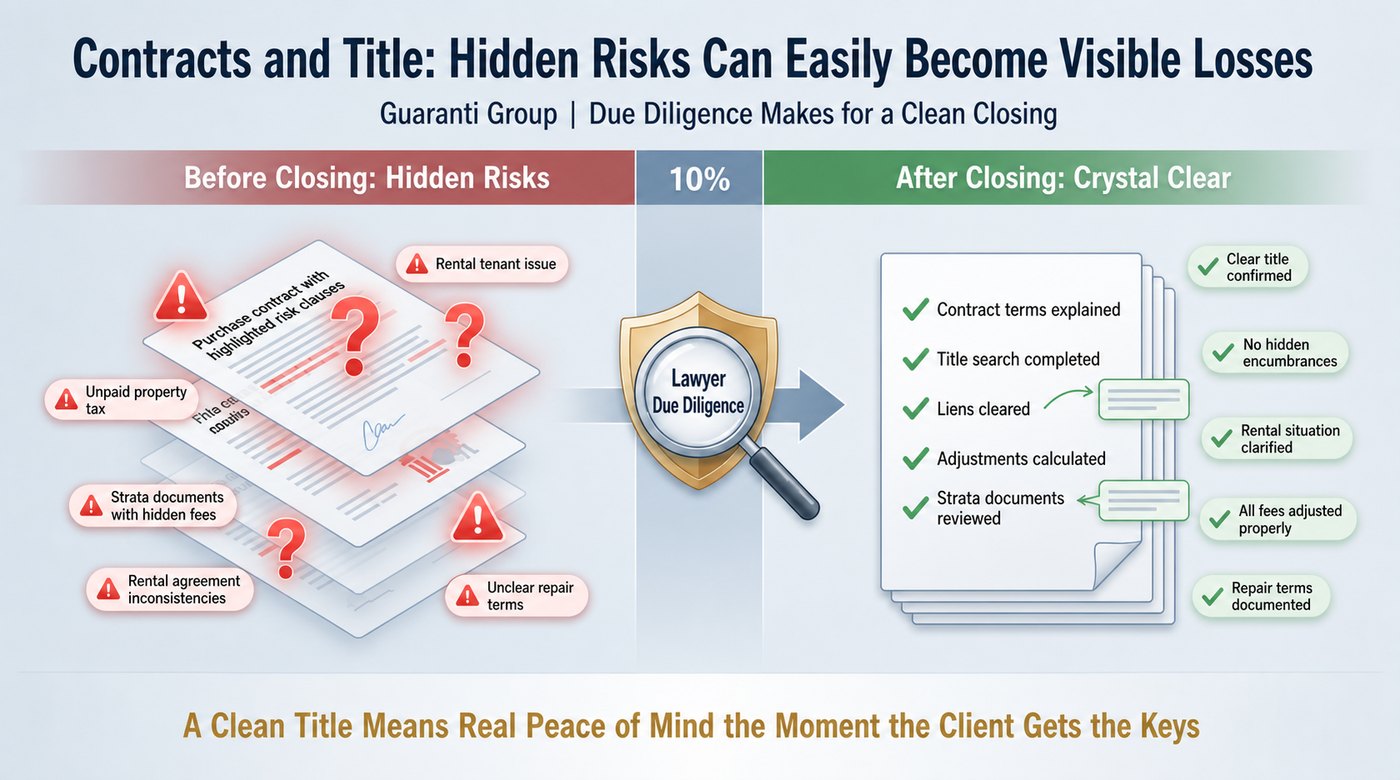
Behind any given house sits title registration, mortgage terms, property tax adjustments, strata fees, tenancies, easements, restrictive covenants, undischarged charges, potential disputes — and hidden costs capable of affecting your cash flow for years.
Completion is not an administrative process. It is a transfer of risk. A diligent lawyer’s job isn’t getting the documents signed. It’s making sure that before you sign, you can see clearly whether this property has problems, whether this mortgage has consequences, and whether this transfer is genuinely clean.
One — a contract you don’t fully understand, paid for later
Many buyers assume the contract is the agent’s territory and the lawyer merely reviews documents at the end.
That assumption is expensive.
In BC, a purchase contract isn’t a form. It’s a binding legal document in which every condition, every date and every added clause can determine whether you can withdraw, whether you have recourse, and what additional costs you carry.
Questions that belong in that review:
- Is there a tenant? How is the tenancy being handled?
- Are the repairs the seller promised set out precisely?
- Do the completion date and the timing of funds actually align?
- Have the strata documents been properly examined?
- Are there restrictions, easements or neighbouring-use issues?
- Are there clauses unfavourable to the buyer that are easy to skim past?
A lawyer doing this properly doesn’t ask whether your name is spelled correctly and whether you’re ready to sign. They explain what the significant terms will mean for you. BC practice materials are explicit that a lawyer handling a residential transaction should review the purchase contract, correspondence, title search and statement of adjustments, and satisfy themselves that these are accurate.
The value of contract review isn’t visible when a transaction goes smoothly. It’s visible when a dispute arises later. A clause you didn’t understand today is often an expensive lesson tomorrow.
Two — title that isn’t clean, and keys that don’t settle anything
One of the central questions in any purchase is whether title is clean.
People assume that if a transaction can close, the title must be fine. Not necessarily. Title can carry a range of things an ordinary buyer wouldn’t know to ask about:
- Whether the previous owner’s mortgage has actually been discharged
- Liens, outstanding debts or court registrations
- Easements, rights of way, restrictive covenants
- Whether property tax, utilities and strata fees have been correctly adjusted
- Whether a strata has levied a special assessment or has undisclosed matters
- Whether, after completion, you will in fact be registered as the legal owner
This is why the title search and the closing documents carry so much weight. In a BC conveyance, the lawyer or notary will typically conduct the title search, prepare the transfer documents, handle property tax and strata adjustments as the circumstances require, and ensure funds and registration complete correctly. The BCFSA describes the completion process as involving the statement of adjustments, arrangement of funds, and registration of the new owner in the land title system.
A diligent lawyer doesn’t assume everything is fine. They look for the problem, raise it, and deal with it.
In Metro Vancouver in particular, where a property routinely runs into seven figures, a small title defect can become a serious obstacle to a future sale, a refinancing, a mortgage approval, or a family’s wealth planning.
What matters most at completion isn’t speed. It’s cleanliness. Clean title is what makes the moment you take the keys feel settled.
Three — a mortgage judged only on rate, and the terms that bind you afterwards
At completion the buyer’s questions are usually: is the mortgage approved, and what’s the rate?
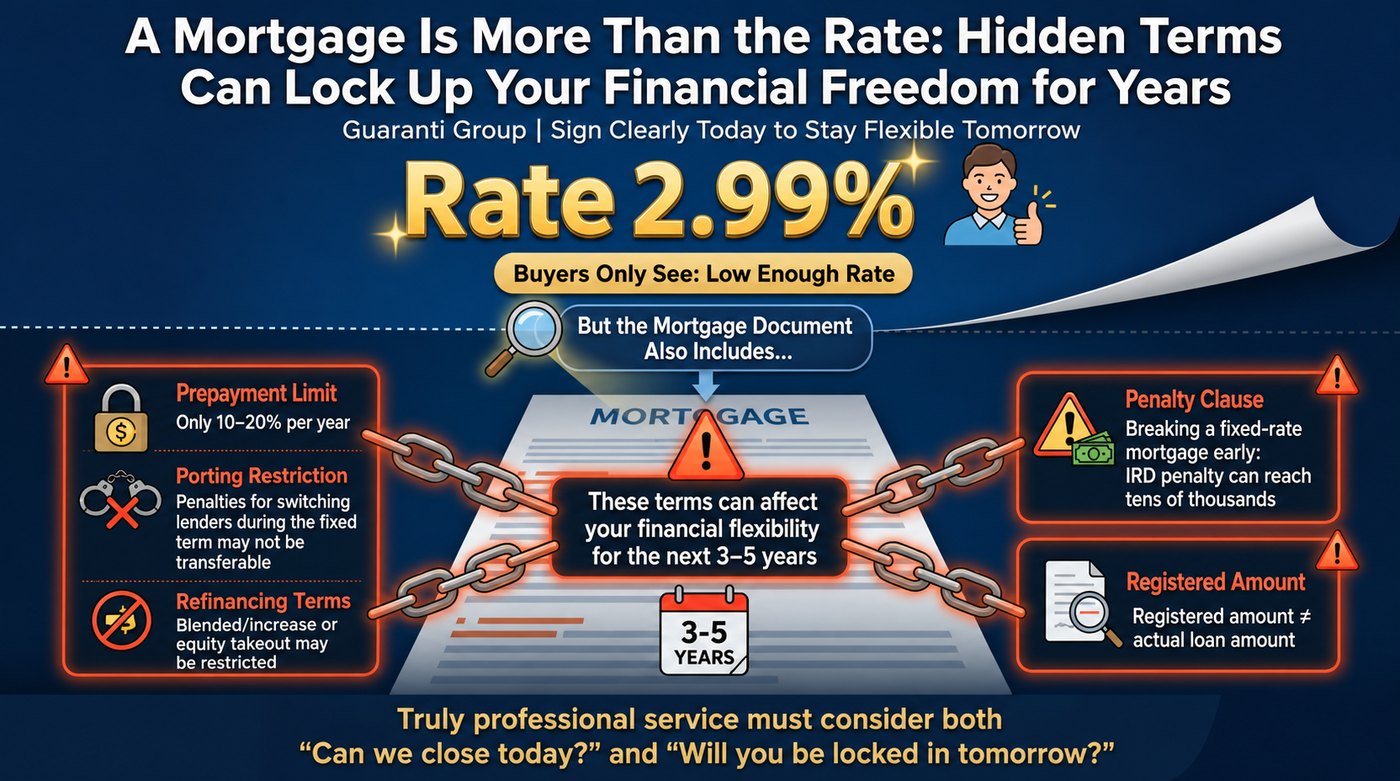
What a lawyer and a mortgage advisor should be raising is that the mortgage documents contain far more than a rate. They contain the rules governing how much room you’ll have to adjust your finances over the next several years.
For example:
- What are the prepayment privileges?
- How is the penalty calculated?
- Does breaking a fixed-rate term trigger a substantial penalty?
- Can the mortgage be switched to another lender at renewal?
- Is it portable?
- Are there restrictions on refinancing?
- Does the registered charge amount match the amount actually borrowed?
- Does this structure conflict with future plans — moving, renovating, renting out, or restructuring assets?
Buyers focused on shaving a fraction off today’s rate frequently don’t realise that selling, switching lenders, increasing the loan or paying it out early can cost thousands more because the terms weren’t flexible.
In a BC transaction the buyer’s lawyer will typically prepare the mortgage documents according to the lender’s instructions, and handle the transfer, property transfer tax forms and statement of adjustments. Which makes the lawyer more than a witness to signatures — they’re the last checkpoint at which a client can genuinely understand what they’re taking on.
A mortgage doesn’t only buy today’s house. It shapes several years of financial flexibility. Professional service has to consider whether you can complete today and whether you’ll be locked in tomorrow.
What a good lawyer actually does
The risk at completion isn’t the volume of documents. It’s a client signing them without understanding.
Four things, at minimum:
Make the contract clear. Not translating clauses, but explaining how the key terms affect your rights, your obligations and your future exposure.
Make the title clear. Not just following the process, but confirming there are no unresolved charges, registrations, costs or restrictions at the point of transfer.
Make the adjustments clear. Property tax, strata fees, deposits, mortgage advance, legal fees, government fees — so you know precisely what you need to have available.
Make the mortgage clear. So you understand you’re signing a long-term commitment affecting future cash flow, not a rate sheet.
Our view
Buying property in Vancouver is not a matter of listing with an agent or writing an offer.
It’s a system where law, financing, tax, title and household finances all intersect — and a diligent property lawyer is the engineer responsible for the whole of it. They read the contract so you avoid neighbour disputes and hidden costs. They search the title so the property arrives clean. They interpret the mortgage so that settling into a home today doesn’t compromise your options later.
Our legal team works from a simple position: a lawyer’s value isn’t in how many documents a client signs. It’s in whether the client understands what each choice costs them at the moment they sign.
A closing thought
Buying a home is one of the larger decisions most people make, and completion is often treated as a minor final step.
Anyone who has handled enough transactions knows otherwise. Completion isn’t the finish line. It’s where the risk finally comes to rest.
- Before you sign — has anyone made the contract genuinely clear to you?
- Before you pay — has the title actually been searched properly?
- Before you take the keys — has anyone explained the mortgage terms?
Those three answers decide whether you’ve bought a home you can settle into, or a series of problems that surface over the following years.
This article is general information, not legal advice. Conveyancing practice and lender requirements vary; your own transaction should be reviewed by a BC lawyer or notary.
First published on Guaranti’s WeChat account.