

When people buy a presale, the market looks one way.
By the time it completes three years later, the market can look quite different.
It is the same unit you signed for.
But what decides whether closing goes smoothly is not only the contract price — it is how the bank values that unit on the day you complete.
In May 2026 the Bank of Canada published its annual Financial Stability Report. One sentence in it is worth reading carefully if your family is holding a presale.
1. What the Bank of Canada actually flagged
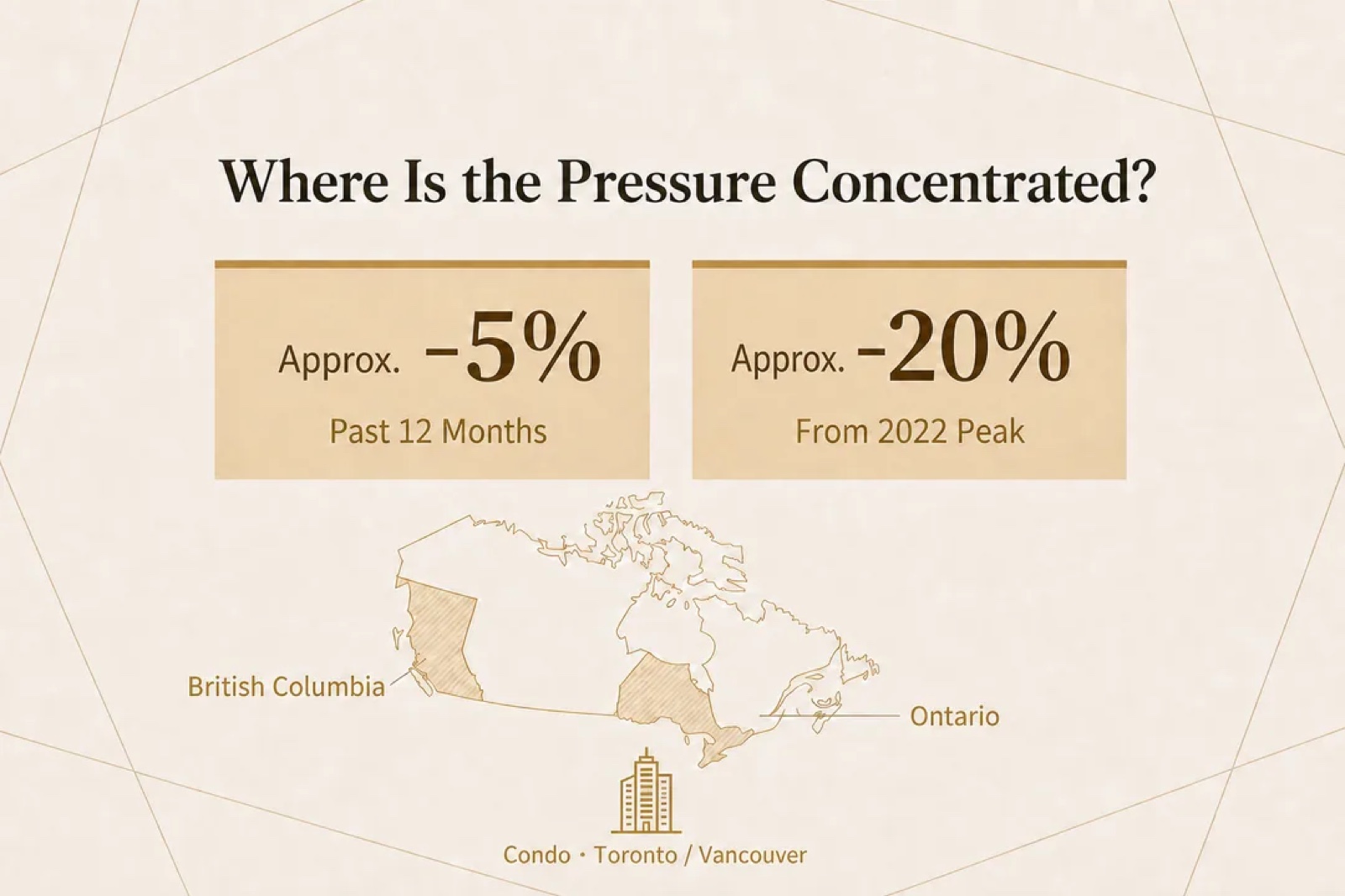
A few figures from the report, for context: typical Canadian home prices are down roughly 5% over the past twelve months, and roughly 20% from the 2022 peak.
The Bank notes that the declines are clearest in Ontario and British Columbia, with new listings increasingly outpacing sales. The most strain sits in the condo market, concentrated in Toronto and Vancouver.
The line worth pausing on is this one:
Some buyers are having difficulty completing presale transactions, because falling prices have made financing harder to obtain.
2. The unit hasn’t changed — so why can closing go wrong?
To see how this happens, it helps to break a presale mortgage into four links. What determines how much you can actually borrow on completion day is not the price you signed at — it is this chain.
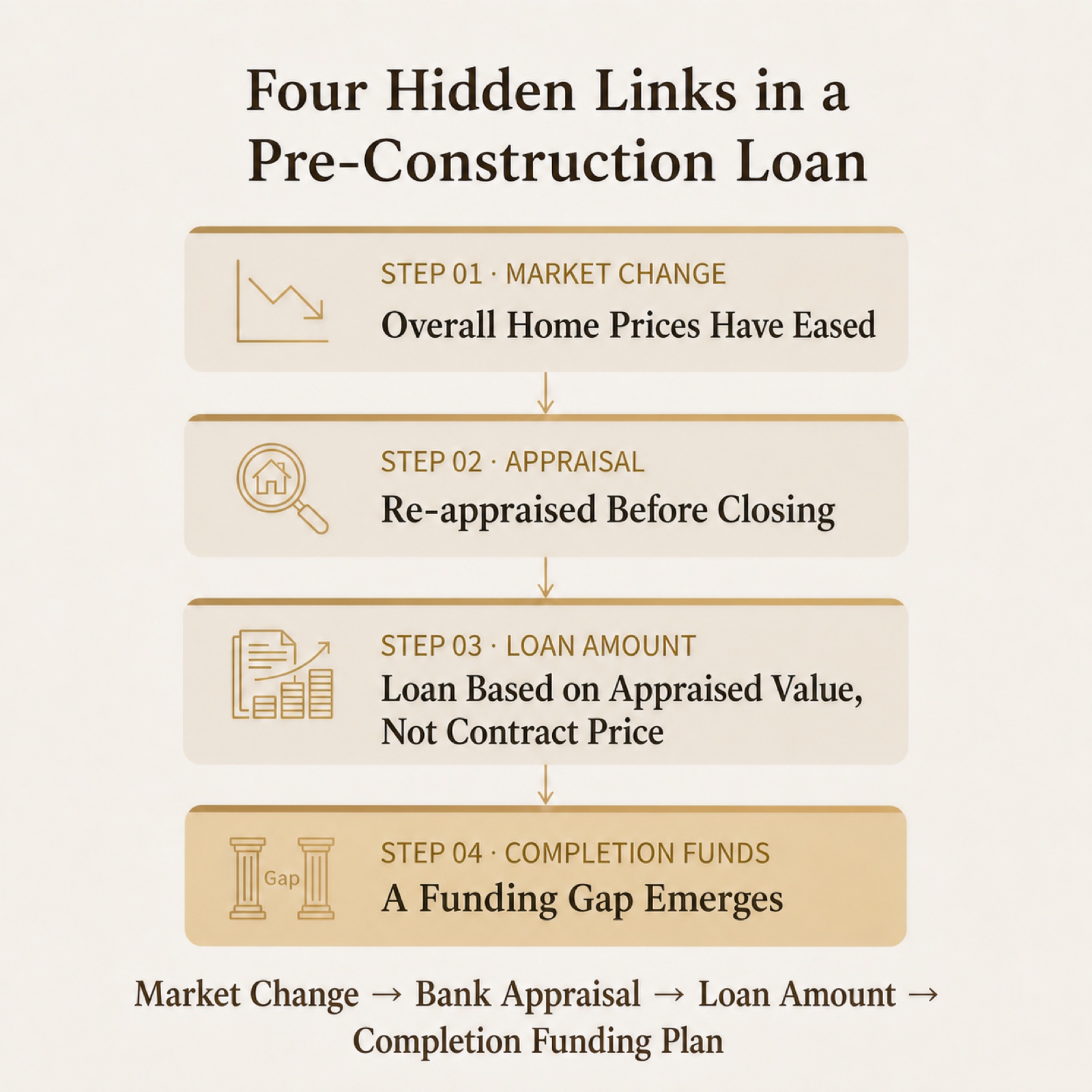
STEP 01 · Market change: prices ease overall
When sale prices in an area drift down, the market reference point for comparable units drifts with them. This isn’t about one particular unit — the whole water level has moved.
STEP 02 · Appraisal: a fresh valuation before closing
Before completion the lender arranges an appraisal. It values what the property is worth today, not what you agreed to pay years ago. With the water level lower, the appraisal can come in under the original contract price.
STEP 03 · Loan amount: lending follows the appraisal, not the contract
Lenders generally take the lower of appraised value and contract price, then apply the loan-to-value ratio. Once the appraisal falls below the contract price, the approved amount falls with it.
STEP 04 · Completion funds: a gap appears
The contract price hasn’t changed, but the loan has shrunk — and the difference has to come from the buyer. That is why someone who could clearly afford the place when they signed can find, at completion, that more cash is needed.
The chain in one line: market change → appraisal → loan amount → completion funding. Every link can quietly change how much cash you need on the day.
3. One risk that gets overlooked
The report also notes that falling prices compress the equity a household holds in its home.
That matters later: if a family needs to refinance to adjust payments or ease cash flow, thin equity can put them below what lenders require — and the refinance may not go through.
Falling prices don’t just shrink a number on paper. They can narrow refinancing as a fallback.
Which is why more experienced families work out the financing before completion, rather than at the last moment.
4. Three things worth doing while you still have time
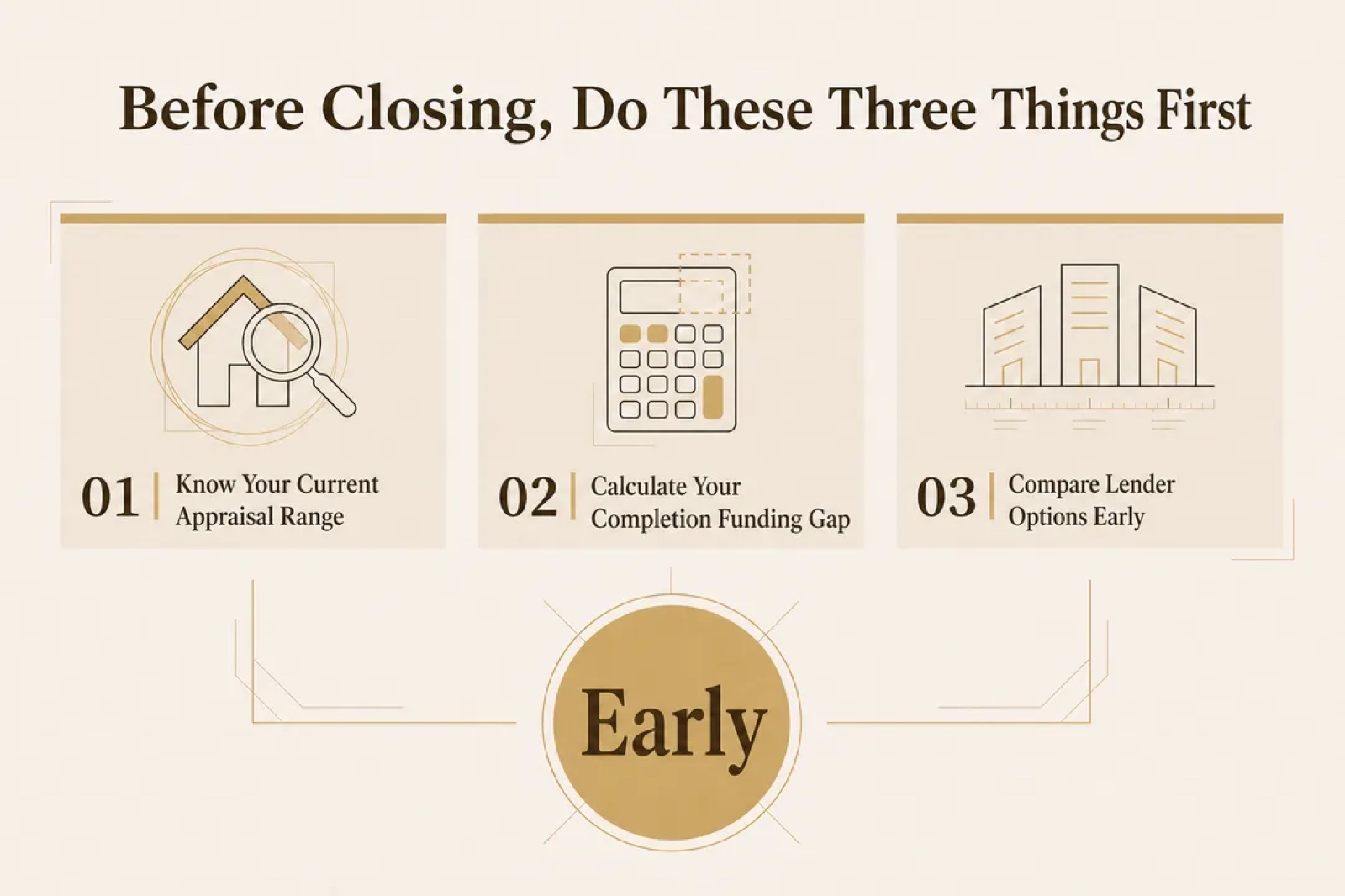
01 | Know the current appraisal range
Don’t anchor to the price you signed at. Understand where comparable units in the same area sit today, so the completion appraisal isn’t a surprise.
02 | Calculate the completion funding gap
Run the scenario where the appraisal lands below the contract price, and work out what cash that would need. Knowing early is a very different experience from finding out on the day.
03 | Compare lenders early
Banks treat presales, appraisals and income differently from one another. Comparing while there is still time usually leaves far more room than scrambling right before completion.
What those three have in common is one word: early.
The Guaranti view
Read on its own, the Bank’s report is a set of macro numbers. For a household it comes down to something much more concrete: on completion day, am I ready?
Whether the market rises or falls isn’t ours to decide. Whether a family has prepared for it is.
At Guaranti we take the view that real mortgage planning isn’t solving a problem once it appears — it is thinking through what could happen before completion arrives.
The market may have changed before your presale completes. The earlier you plan, the easier that day is.
Source and disclaimer: Figures and statements in this article come from the Bank of Canada’s Financial Stability Report—2026, published 28 May 2026. This article is general information only and does not constitute investment, lending, tax or legal advice. Appraisals, loan-to-value ratios and underwriting standards vary by lender, property and individual circumstances; speak with a licensed professional about your own situation.
First published on Guaranti’s WeChat account.