

“You get rewarded for walking?” It sounds improbable the first time you hear it.
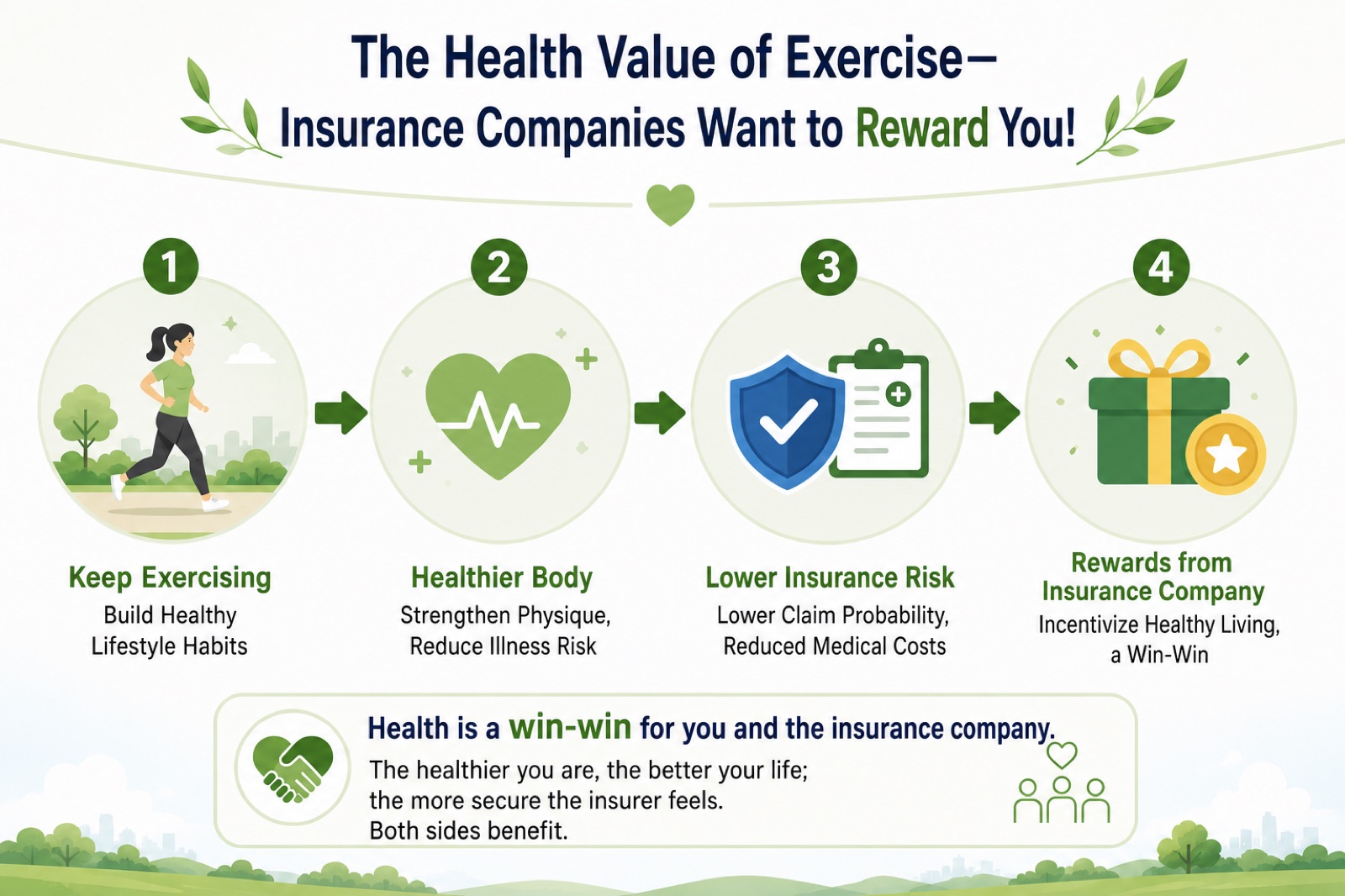
Exercise is something you do for your own health. So why would an insurer hand out points, gift cards or other rewards for it? Are they really not losing money on this?
What an insurer is actually watching is not how many steps you took today. It is a rather more important word: risk.
And once you put “health” and “risk” back into the context of a household, something becomes clear: health was never only a physical matter. It is part of a family’s wealth.
We plan around a lot of assets, and forget the person who creates them
When we do family wealth planning, we are used to counting things. What is the house worth? How much is left on the mortgage? What does monthly cash flow look like? How much will the children’s education take? How much will retirement need?
There is one question we rarely put a number on: what happens if the household’s main earner is unable to work — for six months, a year, or longer — for health reasons?
The mortgage does not pause. Living costs do not disappear. The children’s education does not stop. And when a parent needs care, they do not stop ageing because our income has changed.
That is when it becomes clear that health is not only a physical matter — it can be a household’s financial matter. Because a person’s capacity to work, to earn, and to be present for their family is itself part of the family’s wealth.
We manage the house, the savings, the investments and the retirement accounts, and it is easy to forget that what creates and sustains all of it is, first of all, a person.
Why have insurers started taking an interest in how you live?
An insurer’s core work is managing risk. Which is why something interesting has been shifting in the industry.
The old shape of insurance was: a risk occurs → a claim is made → the cover pays out.
Some interactive programmes are now trying to move the attention earlier — encouraging healthier habits before anything has happened. Exercise, health checks and sleep are starting to appear in how some plans are designed. Vitality-style interactive health programmes are one example, linking everyday health behaviour to points and rewards.
But the part worth noticing is not how many steps, how many points, or what you can redeem. It is the thinking behind it: insurance is beginning to take part in health management before the risk arrives.
A step further on from “what do we do if something happens?” toward “while nothing has happened yet, is there anything we can do?”
That is the genuinely interesting thing behind “rewards for exercising”.
Health and wealth have something in common
Both need time.
One workout does not change a body. One deposit does not change a family’s wealth. What makes the difference is rarely what was done on a particular day — it is what was kept up over a long stretch.
A few more steps today. An earlier night. Regular check-ups. Much like setting aside a little more each month, arranging cover a bit sooner, thinking about retirement a few years earlier.
Today, each looks like a very small choice. But time eventually magnifies them.
A small change each day pays back over the long run. That holds for health. It holds for wealth too.
Wealth planning was never only about money
We talk about property, insurance, investment, tax, retirement. On the surface it all sounds like money.
But take one step back: why do we do any of it?
Managing cash flow, so that when income changes, life does not immediately lose its order. Arranging cover, so the household can keep moving when a risk lands. Building an education fund, so a child has more options later. Planning retirement, so that the day you stop working you can still live the way you want to.
So what wealth planning actually concerns itself with is not the figure in the account — it is the life those figures are meant to protect.
Seen that way, health stops being a separate topic sitting outside wealth planning. Because every form of wealth ultimately needs a person to create it, manage it — and a healthy self to enjoy it.
The Guaranti view
We spend a great deal of time managing our assets — the house, the savings, the investments, the retirement accounts. But it is worth asking ourselves occasionally: the person who creates all of it — have we been managing them with the same care?
Health management and wealth planning are not two separate propositions. One concerns who you are today; the other concerns the life you’ll have tomorrow. And what we are really trying to protect is the same thing in both cases: that you and your family keep the ability to go on living the life you want.
So perhaps what the insurer is rewarding was never really those few thousand steps. What it points to is something simple, and easy to overlook:
First published on Guaranti’s WeChat account.