
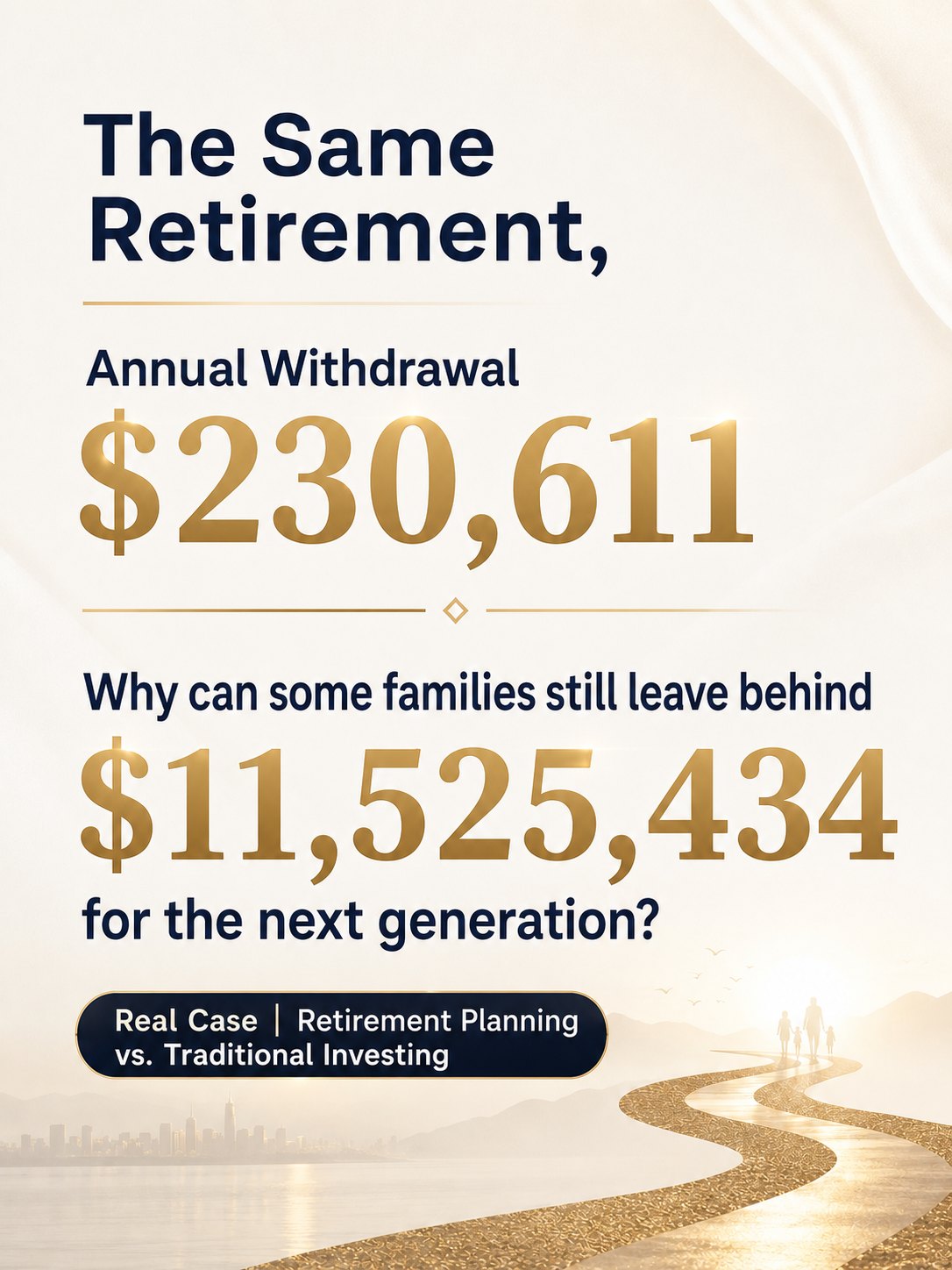
An annual retirement income of $230,611 is, for most families, a comfortable result.
Now suppose two families draw exactly that — the same income, the same standard of living — and one is still able to leave more than $11 million to the next generation, while the other leaves close to nothing.
What separates them isn’t the size of the retirement income. It’s whether anything was structured in advance.
The family
There’s a common assumption that planning is for people who haven’t yet accumulated much. In our experience it runs the other way: most clients start planning seriously after they already have a solid base.
The family who came to us spanned three generations. Years of building had left them with assets in the tens of millions and a genuinely stable financial position. Growth was no longer the concern.
The question that brought them in was narrower:
After we retire, while maintaining the life we have now — how much can we actually pass on?
That question is where the planning work began.
What they wanted was certainty, not more
Talking it through, what mattered to them became clear:
- Don’t change the standard of living
- Don’t disturb the existing allocation
- Prepare properly for a long retirement
- Build something more durable for the next generation
In other words, they weren’t asking us to plan a retirement. They were asking what their wealth should be doing after retirement.
How we approached it
We did not recommend restructuring their assets.
Instead we worked with a small portion of the total. The existing investments stayed as they were. The lifestyle didn’t change. The allocation wasn’t disturbed.
That portion took on a different responsibility — making the family’s overall structure complete rather than merely large.
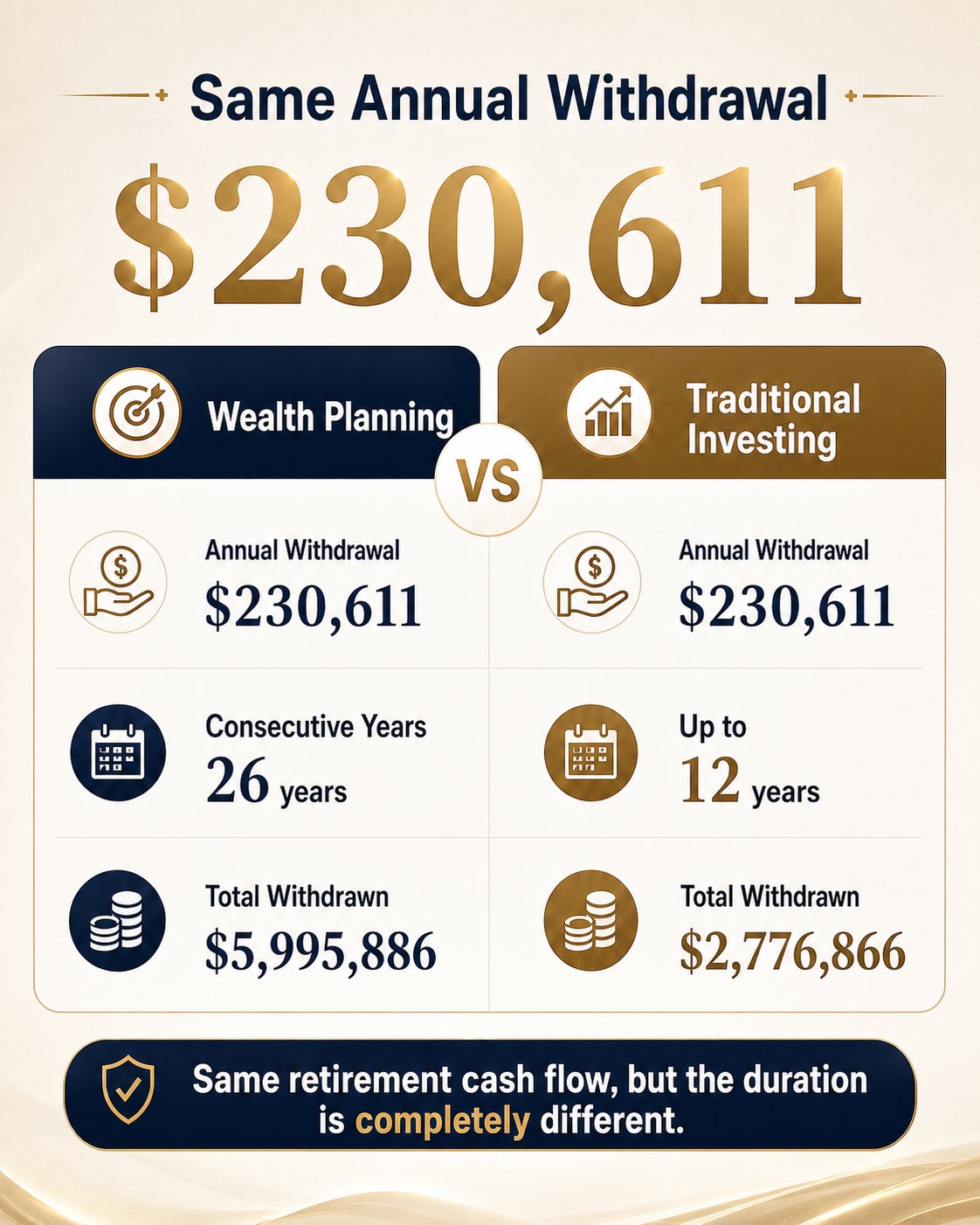
What actually creates the gap
The first reaction to the modelling is always the same: how can the same annual income lead to such different outcomes?
The answer isn’t in the income. It’s in how long the income can be sustained, and whether anything was structured ahead of time.
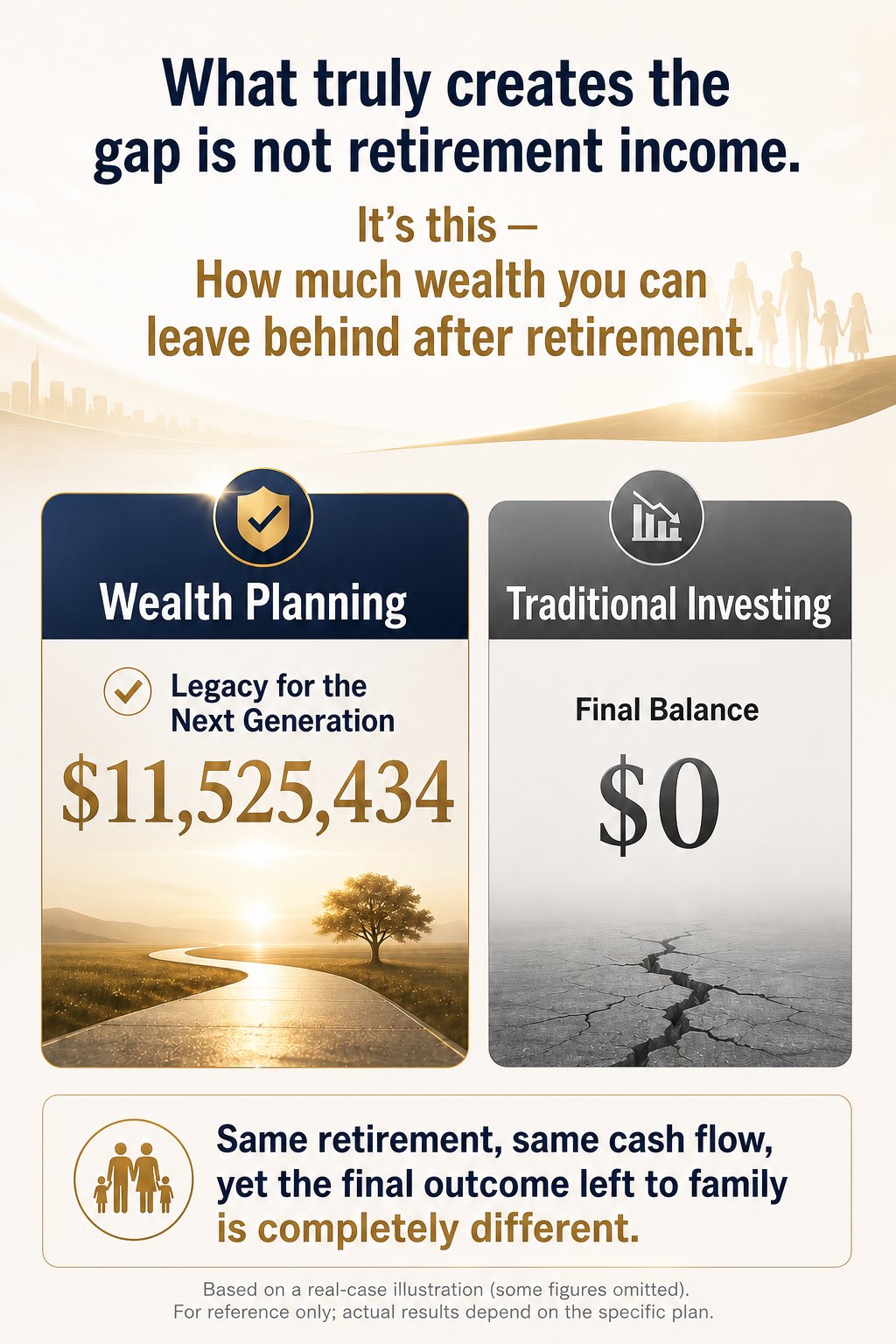
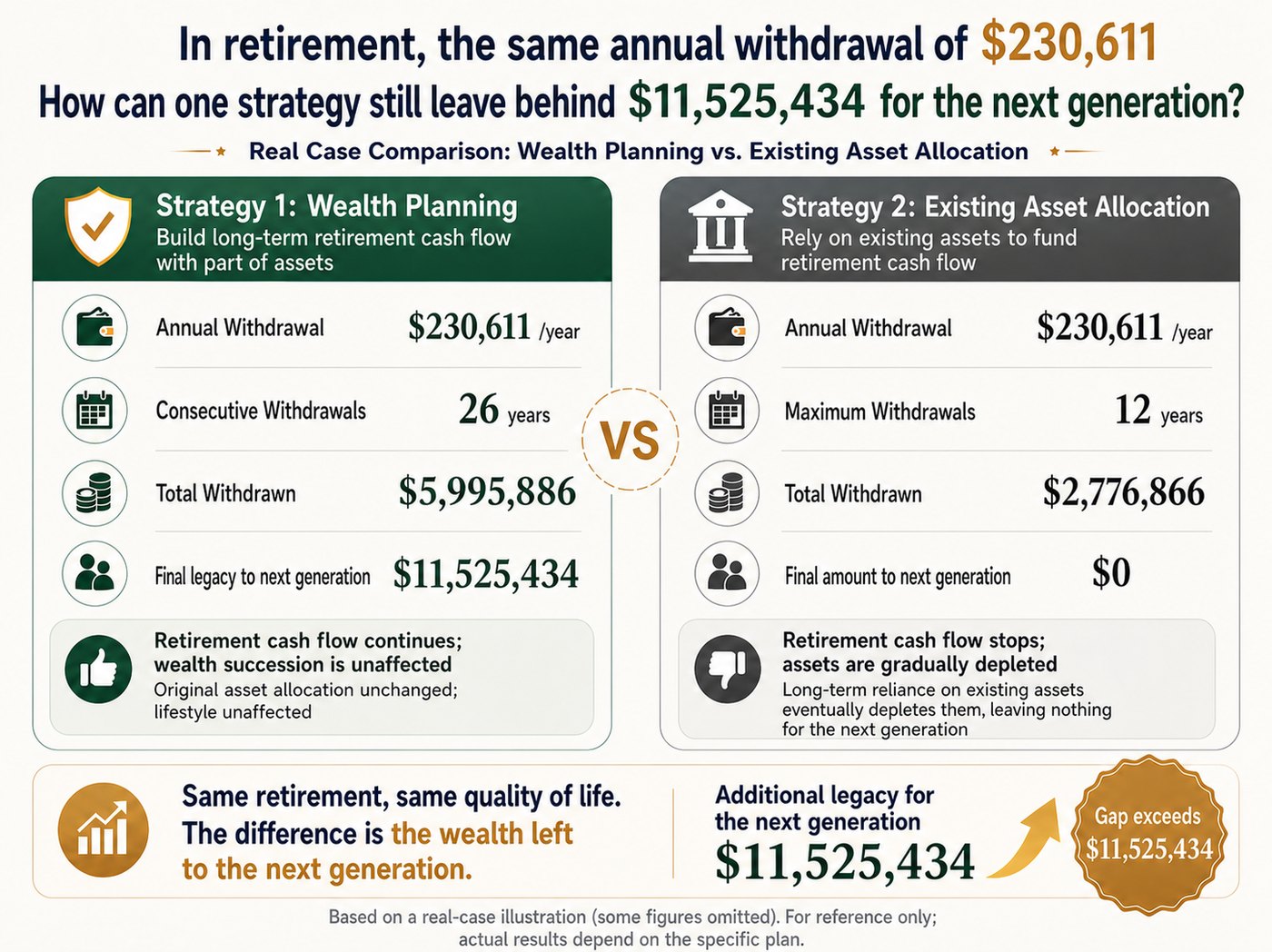
In this case both approaches produce identical retirement cash flow — $230,611 a year.
Structured in advance: the income continues for a materially longer period, and the modelling still leaves more than $11,525,434 for the next generation.
Not structured: the assets are progressively consumed, and very little remains at the end.
The thinking matters more than the case
When planning comes up, the first question is usually does this mean changing all my investments?
Almost always, no.
Mature planning doesn’t overturn an existing structure. It builds a second system alongside it — one that supports retirement, protects the family, and carries succession.
Planning has never really been about a product or a particular investment. It’s about whether the wealth built today keeps doing useful work across the following decades.
Our view
Planning isn’t only about growth.
It’s about letting different parts of a family’s wealth carry different responsibilities. Some creates. Some produces income. Some protects. Some passes on.
Strong planning isn’t about holding more. It’s about each part of what you hold sitting where it belongs.
The figures in this article come from a client-specific illustration based on assumptions agreed with that family, and portions of the underlying data have been withheld. They describe modelled outcomes for one set of circumstances — not a projection, a guarantee, or an indication of results anyone else should expect. Any comparable analysis would have to be built from your own facts, with your accounting and legal advisors involved.
First published on Guaranti’s WeChat account.