
$140K Income, Yet a $300K-Plus Mortgage Was Still Stalled — Rental Income and the Right Lender Made the Difference
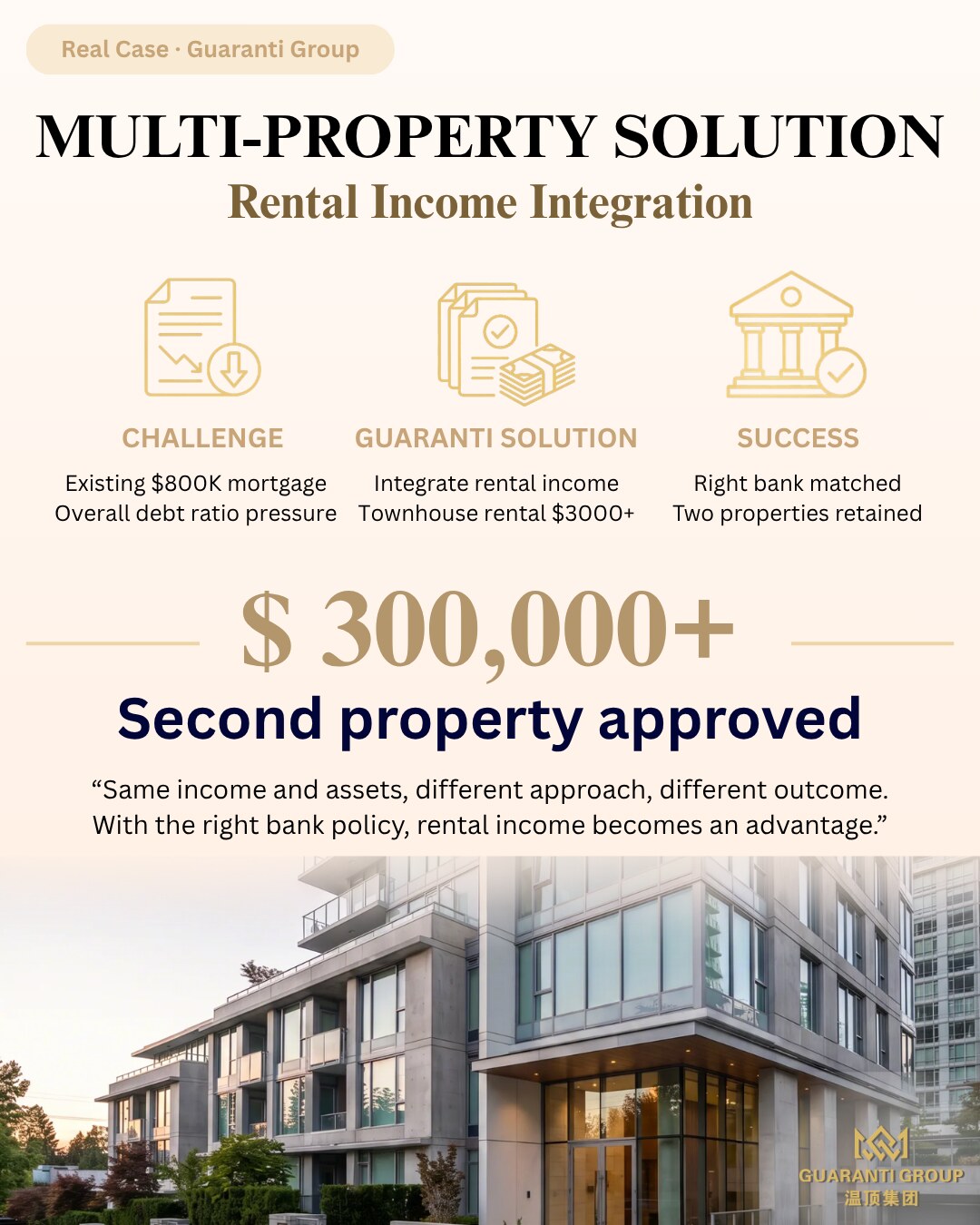
The client is a local resident with stable employment income of approximately $140,000 a year. He already owned a property with an outstanding mortgage of about $800,000 and had roughly $200,000 in savings. On the surface, both his income and overall asset position appeared strong.
He recently found a one-bedroom property priced in the $400,000 range. He planned to make a down payment of approximately $80,000 to $90,000 and needed a mortgage of more than $300,000.
At first glance, borrowing a little over $300,000 on an annual income of around $140,000 did not seem difficult. Once the full calculation began, however, it became clear that the lender would assess more than the new mortgage alone. His total income and debt obligations also mattered.
In addition to the roughly $800,000 mortgage on his existing property, the client had several lines of credit. Although they were unused and carried zero balances, some lender policies could still factor the available limits into his debt-service calculations and borrowing capacity.
Keeping the existing property and mortgage while adding another property and a new mortgage of more than $300,000 therefore continued to put pressure on his ratios under a conventional assessment.
After the client approached Guaranti Group, we reviewed his income, property, liabilities and future living arrangements as one complete picture. During that discussion, we learned that he already intended to move into the new one-bedroom home and rent out his larger townhouse in full. Based on local market conditions, the townhouse was expected to generate more than $3,000 per month in rent.
That genuine occupancy and rental plan created another way for a lender to assess the application.
The Guaranti team compared how different banks treated rental properties, rental income, existing mortgages and available credit limits. By documenting the client’s actual plans and matching them with a policy suited to his circumstances, we were able to include eligible rental income in the overall assessment.
The client ultimately obtained the mortgage he needed, purchased the one-bedroom property and retained his townhouse as a rental property.
This case highlights an important point: an income of $140,000 and a new mortgage of just over $300,000 may look straightforward, but a lender never considers only salary and the amount of the new loan.
When a borrower already owns property and carries a mortgage and other available credit, each lender’s treatment of existing liabilities and rental income can materially affect the amount available.
For this client, neither his income nor his intended living and rental arrangements changed. The key was to present the full financial picture clearly and identify a lender policy that fit it more closely.
The same income, assets and liabilities can produce a very different outcome when the financing is structured differently. When one bank path does not fit, Guaranti helps clients explore other suitable possibilities.
The rates, amounts and timelines in this story were that client’s actual circumstances at the time. Lending conditions change and every application is assessed on its own merits — these figures are not an indication of what any other applicant will obtain, and are not a promise of any kind.
Cases are anonymized and drawn from real client situations.